
The Association for the Advancement of Baltic Studies is pleased to recognize Robert Lipiński for the successful completion of his AABS Dissertation Grant, awarded in 2024.
AABS awards grants of up to $4,000 to support doctoral dissertation research and write-up in any field of Baltic Studies. Funds may be used for travel to research site, equipment, duplication or other needs as specified.
Lipiński used the grant to support his doctoral dissertation project, “Over the Finnish Line.” He provided a report at the conclusion of his research, which we publish below with light editing.

Robert Lipiński is a doctoral student of Politics at Oxford. He uses quantitative methods to study historical political economy (HPE), which is exploring the role played by history in shaping political developments in the long run. Alongside his doctoral studies, Lipiński has been working in the World Bank on several projects related to public administration reform, among others, focused on local governments in Latvia and Estonia. He is also working on payroll analytics diagnostics for the Inter-American Development Bank. Lipiński holds a BSc in Philosophy, Politics and Economics from University College London, and an MPhil in Development Studies from the University of Cambridge. Personal Site.
Over the Finnish Line
Dissertation Grant Report from Robert Lipiński
The AABS Dissertation Grant opened new frontiers for my research, both in terms of its depth and scope.
The theme of my thesis – Over the Finnish Line – alludes to the supportive role that the independent TV from Helsinki played in pushing Soviet Estonia towards independence and democracy. Not unlike West German TV in East Germany or the Italian TV in communist Albania, Finnish TV is recounted as serving as an inspiration for a better future during the grey period of the 1970s and 1980s, although due to technical and topographical conditions, it was only available in certain parts of the country. And while those other case studies have now been thoroughly explored by researchers, who demonstrate how such quasi-random exposure to liberal media serves as a natural experiment, to date, there has been no similar investigation of Finnish TV in Estonia.
My work seeks to quantify the extent to which people living within the range of the Finnish TV (roughly 30% of the Estonian territory, as seen on the map) have started to act and think differently. Beyond the publicly available outcomes, like the municipality-level election results in independent Estonia, I sought to obtain archival data that could tell me more about the differences between the treated and control localities during the Singing Revolution. During my archival visits in Estonia, I therefore compiled data like the results of the Independence Referendum of 1991 down to the poll station level. The AABS grant has, among other things, enabled me to return to the branches of the archives outside Tallinn, where other crucial documents from the Soviet era are stored. Those include the local-level participation in the voluntary sobotniki public works and the Communist Party membership records. Moreover, the Tartu archives turned out to contain reports by the contemporary local authorities, which detailed where and what measures were being taken to prevent Finnish TV watching during the 1980s. Lists of individual towns and villages contained in those reports allowed me to precisely determine the area exposed to Finnish TV. Thanks to those extra data points, my thesis has become a truly comprehensive overview of the role of Finnish TV in Soviet Estonia.
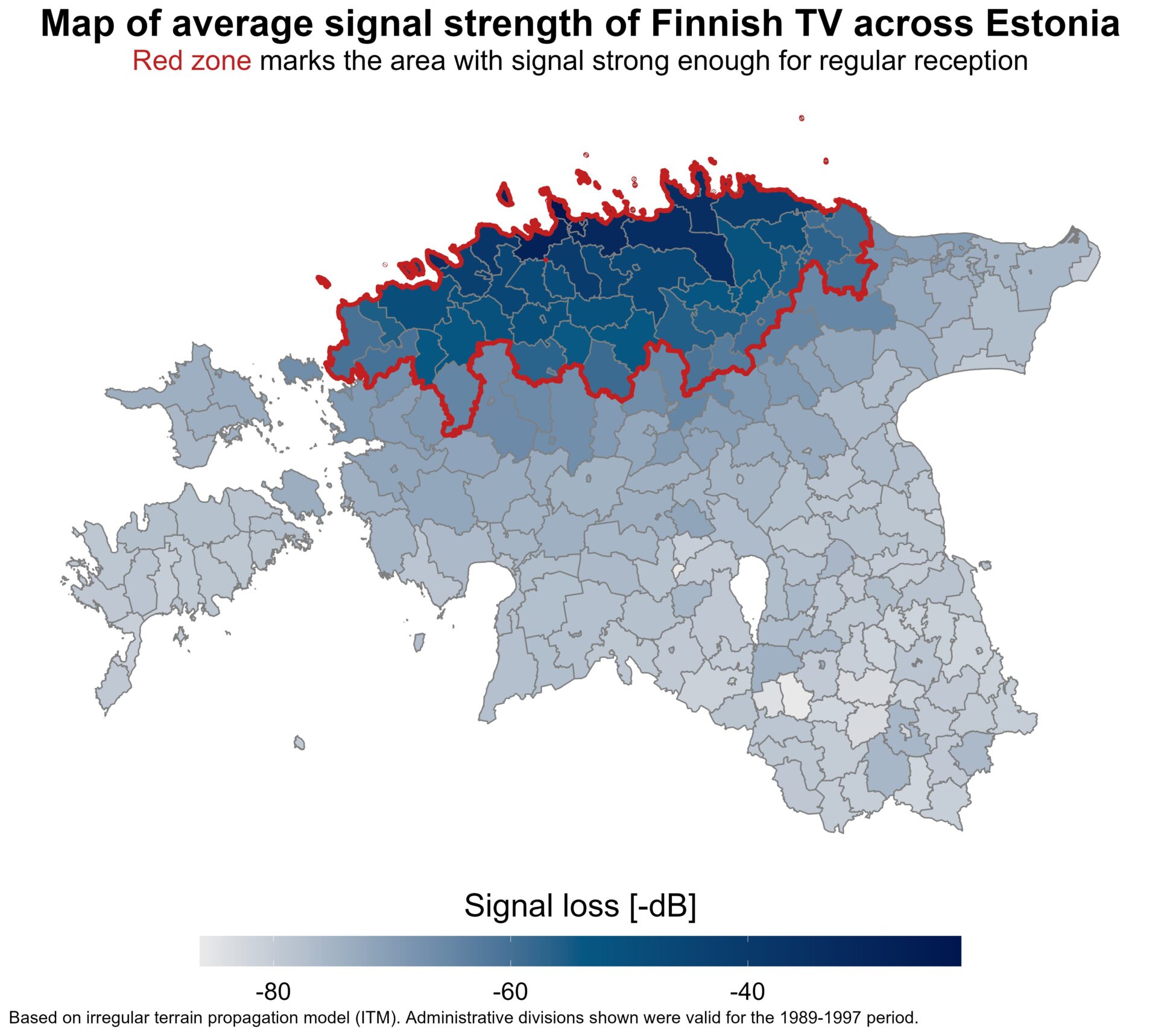
Finnish TV strength map of Estonia
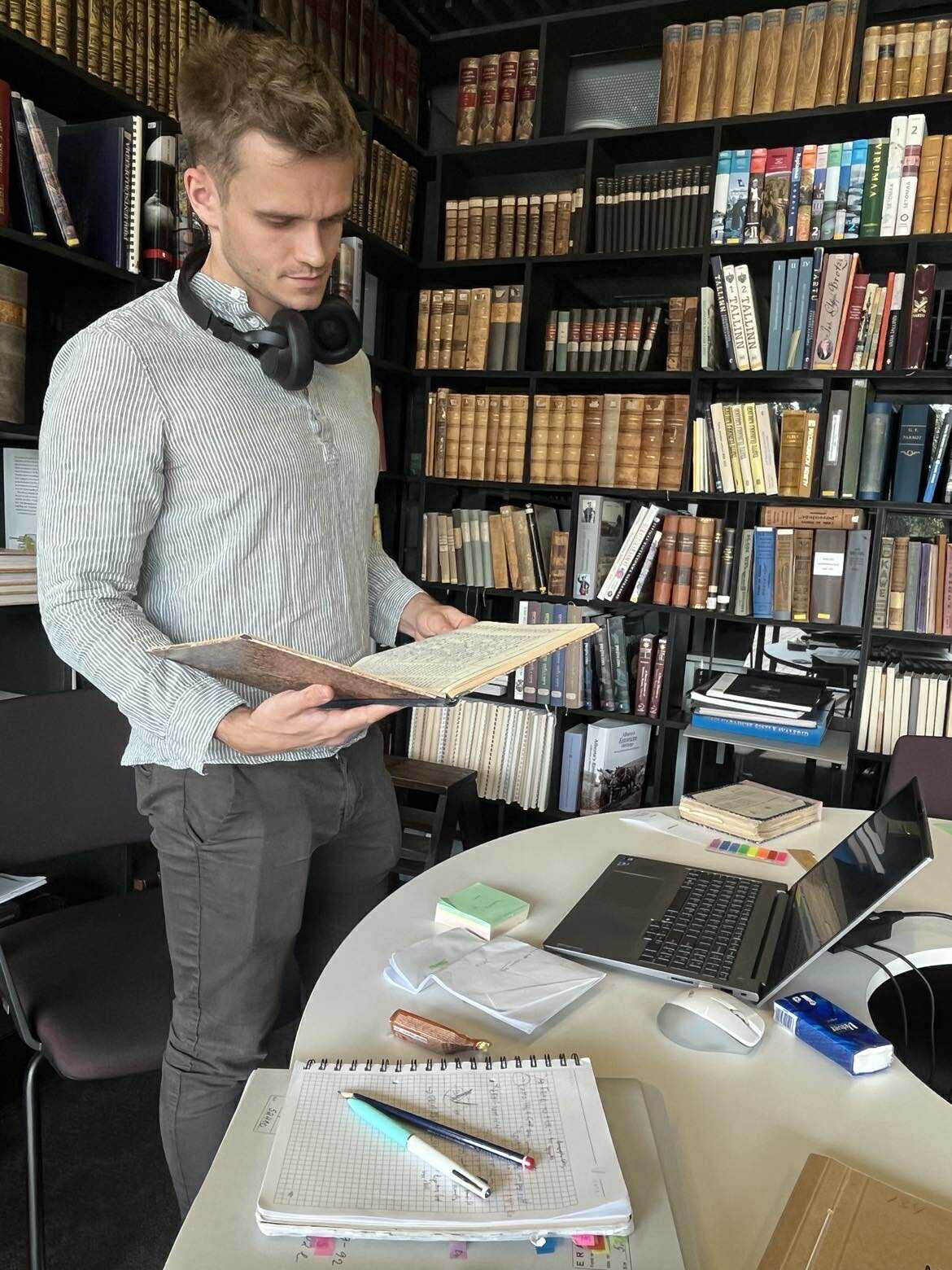
Robert in the archives
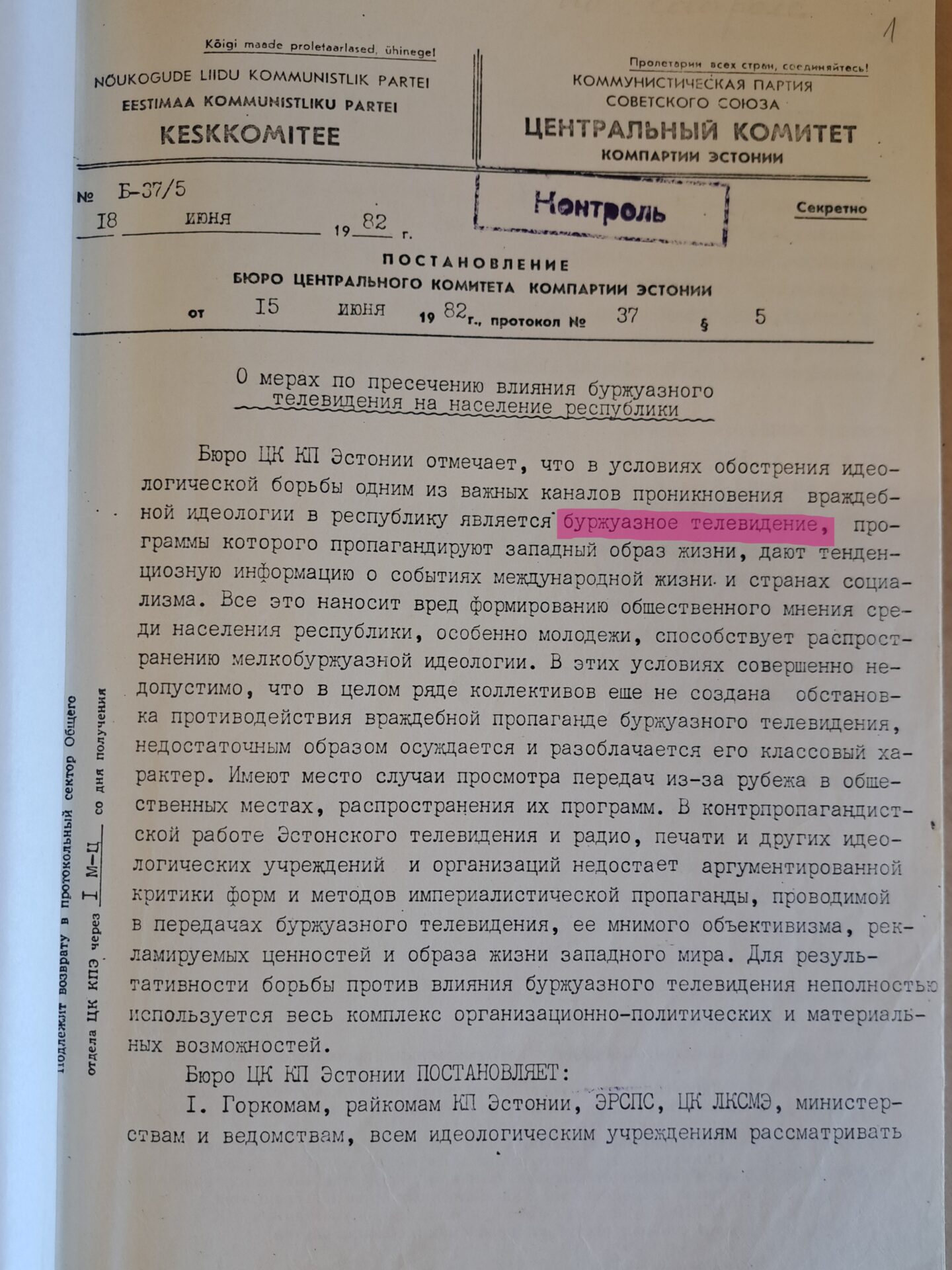
Archival document: Central Committee of the Communist Party of Estonia – measures against bourgeois (Finnish) TV
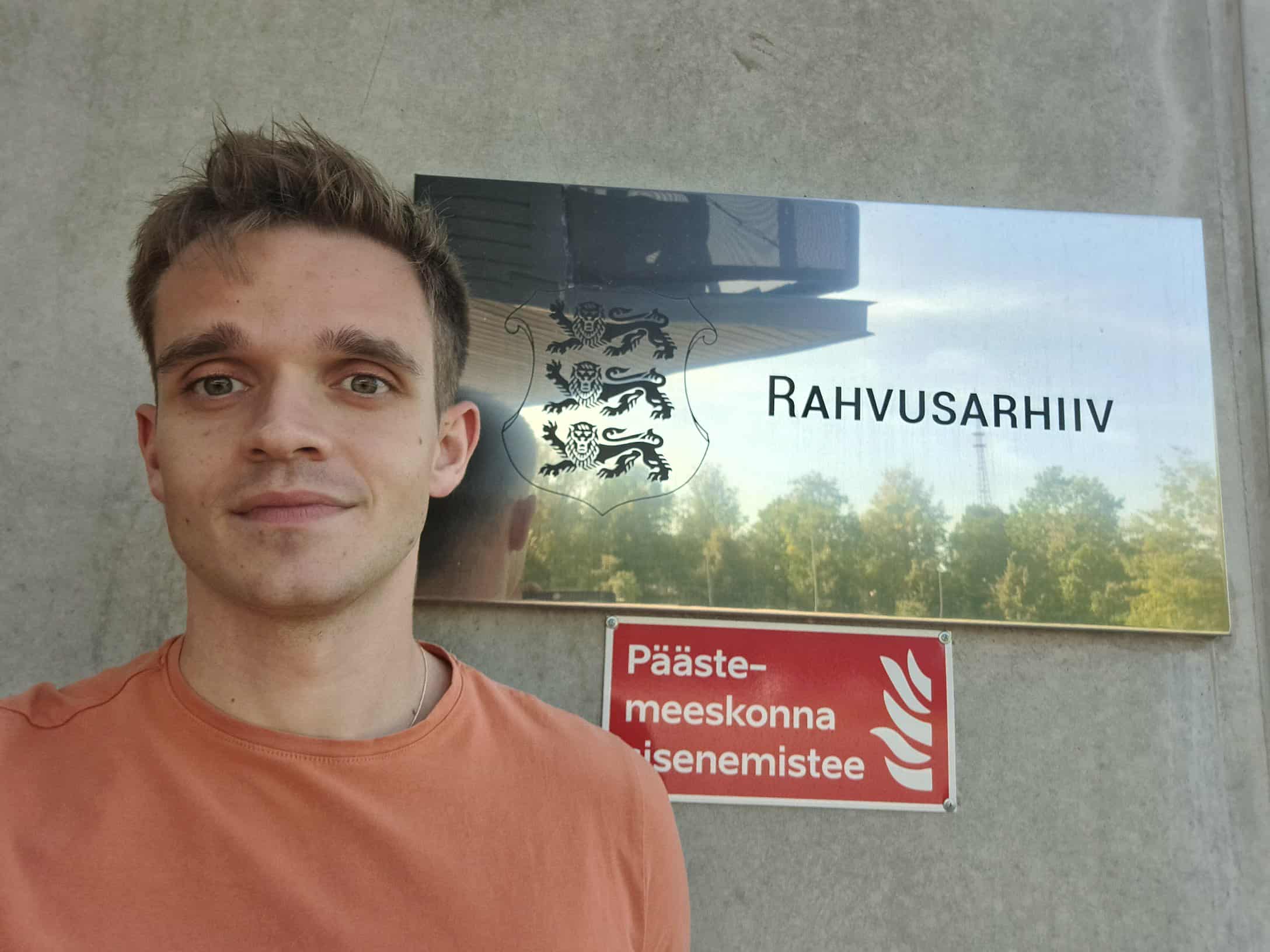
Robert outside the archives
When it comes to the width of the work, the AABS grant allowed me to share my findings during some of the largest and most prestigious conferences in political science – the 28th World Congress of the International Political Science Association (IPSA) in Seoul. During this gathering of over 3,500 researchers, I was able to learn more about the state-of-the-art methods for studying topics like protests under autocracies and AI-based classification tools from the best scholars in the world. Most importantly, I presented my thesis findings for the first time in their full scope. Not only did I obtain invaluable feedback on my project, but also, being one of only few presenters working on the region, I trust I was able to promote at least somewhat greater interest in and importance of the Baltic Studies among the broader political science community.
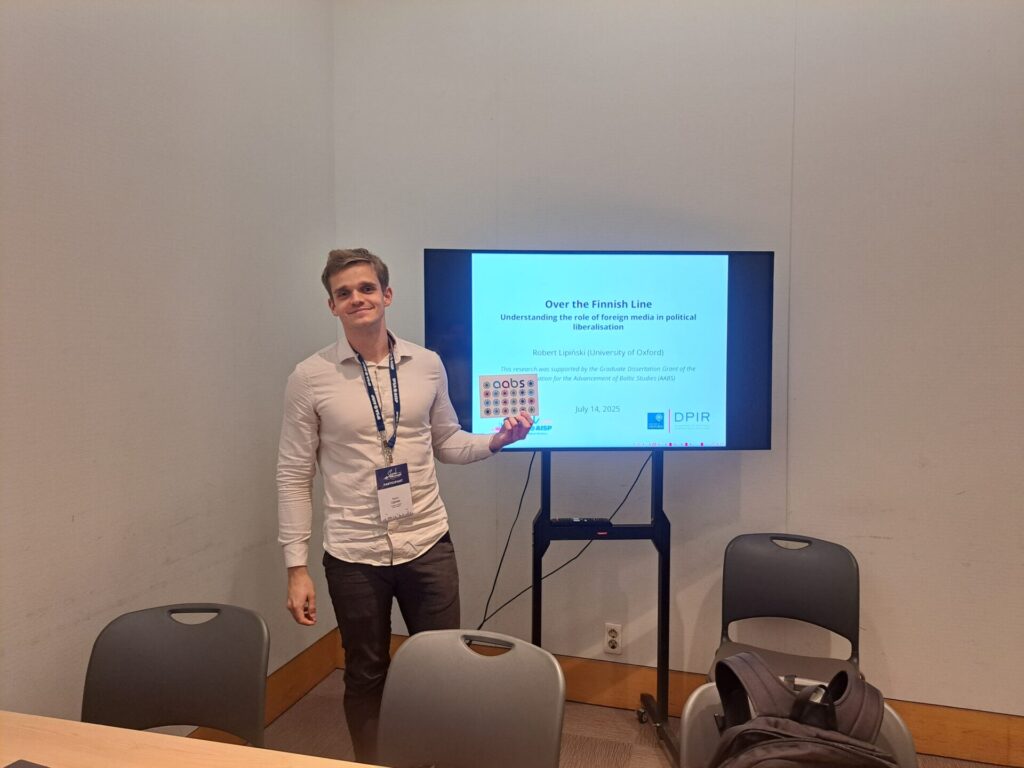
Robert presenting at the IPSA conference
The extensive research done for this thesis also spawned a few other projects related to the Baltic states. Reading about the Singing Revolution, I realized that there was at least one other relevant event that deserved a closer scientific look, that is the 1989 Baltic Way demonstration – the largest human chain in history. Therefore, I’m currently also working on a paper with a provisional title Chain Reaction, where I use electoral and survey data from Estonia to measure the lasting impact of participating in this historical demonstration (relying on the distance from the Baltic Way pathway as an ‘instrument’ for participation). I’ve also become involved in a collaborative project of the World Bank, the European Commission, and the Latvian government, which focuses on measuring the quality of local public services across the country.
Finally, the grant, and in particular the visit to Estonia, further grew my passion for the Baltics. Although I’ve visited Estonia several times before, it was the first time that I was able to freely drive around the country, visiting the local branches of the National Archives and smaller towns and settlements on the edges of the Finnish TV range. The pictures of the charming towns blending with the intemporal beauty of the countryside still make me smile when I go back to them. And so do the memories of kindness and help I’ve received from multiple people along the journey – from the archival workers, through the Estonian researchers, to the multiple AABS members.
– Robert Lipiński, 2025
Robert Lipiński
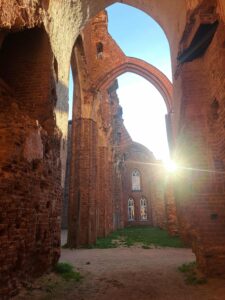
Tartu Cathedral