
The Association for the Advancement of Baltic Studies is pleased to announce that Holger Mölder has been awarded a 2026-2027 Academic Events and Projects Grant to support the workshop “The end of democracy? Is the populist wave unstoppable?” scheduled for June 30, 2026.
The AABS Grant for Academic Events and Projects of up to $5,000 is available for any academic event or scholarly project that promotes Baltic Studies.
The 2026 applications were evaluated by the AABS 2025-2026 Grants and Awards Committee consisting of AABS VP for Professional Development Dr. Kaarel Piirimäe, AABS President Dr. Jörg Hackmann, and AABS Director-at-Large Dr. Dovilė Budrytė. Learn about the other 2026-2027 recipients here.
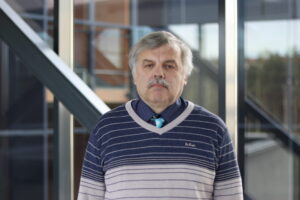
Dr. Holger Mölder is Associate Professor in International Relations and International Security Studies at the Tallinn University of Technology, School of Business and Governance, Department of Law, leader of the research group “International Relations, security, law and technology” at TalTech and Visiting Professor at the University of Tartu. Before he worked for 20 years (1995-2015) at the Estonian Military Academy and the Estonian Ministry of Defense. In 2010, Mölder received a Doctorate in Political Science from the University of Tartu. In his research, he focuses on various international security and international relations issues, including cognitive warfare, influence and information operations, cyber security, United States, European & Baltic security, political cultures, and strategic risk & threat analysis.
Event Overview
The workshop, “The End of Democracy? Is the populist wave unstoppable?” will bring together highly qualified experts and internationally recognized scholars from various countries, particularly the United States, the United Kingdom and Estonia, in Tallinn. The workshop will address the future of democratization in an increasingly turbulent world that is facing challenges to the rules-based global liberal order established after the Cold War. The key issues of the planned brainstorm are how to preserve the democratic principles of international order and steer the world towards a more peaceful future. The event will expand the invited speakers’ knowledge of the progress of democratization in the Baltic states, which serve as an example of how small republics in Eastern Europe, once occupied by the Soviet Union, successfully integrated into the Western liberal democratic system. For the Baltic audience, the event provides an opportunity to learn about leading Western scientists’ research and receive advice on sustaining a democratic civil society. In addition to democratization, the event will cover two important contemporary international political topics: the implications of the war in Ukraine for Russian and Ukrainian societies and the future of the international legal order.
The event follows the workshop, “Global Knowledge Warfare after Russia’s Invasion of Ukraine: Strategic Narratives, Strategic Competition, and Global Order,” held at Stanford University in April 2023. This addressed questions such as whether a democratic recession has reversed the global wave of democratization that began at the end of the 20thcentury, and which factors have empowered democratic and populist forces. These questions remain urgent three years later, as the international order remains extremely unstable and full of challenges. The ongoing war between Russia and Ukraine and conflicts in the Middle East are moving us further away from the international order that was more favorable to democratization in the early 1990s.