
The Association for the Advancement of Baltic Studies is pleased share stories and experiences from the graduate students and early career scholars who received travel grants to attend the 30th Biennial AABS Conference held May 28-30, 2026, on the campus of the University of Illinois Urbana-Champaign.
AABS awarded over three dozen grants to young scholars who represented the wide breadth of disciplines, institutions, and interests that make Baltic Studies what it is. Their contributions to the conference were critical, and in their hands, the future of Baltic Studies is bright.
For ease of navigation, grantees appear in alphabetical order by first name. More reports will be added as they are received.
Austė Aleksandravičiūtė-Šviažienė: "Communicating Medical Errors: Perspectives of Female Physicians within Legal and Psychological Contexts"
Thanks to the AABS Travel Grant, I had the opportunity to participate in the 30th Biennial Conference of the Association for the Advancement of Baltic Studies, “Diasporas: Building Bridges Across Nations,” hosted by the University of Illinois Urbana-Champaign.
During the conference, I presented my research paper, “Communicating Medical Errors: Perspectives of Female Physicians within Legal and Psychological Contexts.” The presentation explored gender and generational related issues in the professional communicatio, and reflected broader research interests in communication, trust, and organizational culture. Presenting the findings to an international audience provided valuable feedback, thoughtful questions, and new perspectives that will help shape the future development of this research.
While sharing research was an important part of the conference, what made this experience especially meaningful was the opportunity to engage with scholars from different disciplines, institutions, and countries. The conference theme, “Building Bridges Across Nations,” was reflected not only in the academic program but also in the conversations taking place between sessions, over meals, and during social events. These informal exchanges often proved just as valuable as the formal presentations, creating space for intellectual curiosity, collaboration, and mutual learning. As a scholar from Lithuania, I particularly appreciated the opportunity to discuss Baltic issues in an international environment, and hear diverse perspectives on the region’s history, present geopolitical challenges, and future challenges. The conference allowed me to strengthen academic connections that may lead to future collaborations and joint research initiatives.
The AABS Travel Grant made it possible for me to participate in a vibrant academic community that extends far beyond individual disciplines or national borders. I am grateful for the opportunity to contribute to this unique gathering of Baltic Studies scholars.
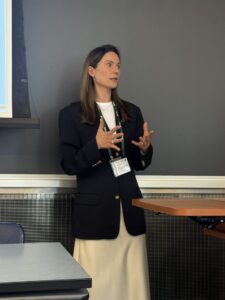
Dr. Austė Aleksandravičiūtė-Šviažienė is a lecturer at Vytautas Magnus University and a communication professional. Her research focuses on political communication, crisis communication, trust-building, and professional communication in sensitive environments. She is particularly interested in the role of communication in managing uncertainty, fostering dialogue, and building public trust.
Fred Gregor Rahuoja: "Building Digital Bridges: Estonian NLP as a Lifeline for Endangered Khanty"
The AABS Student Travel Grant allowed me to attend the 30th biennial conference. Without the Grant, it would have been financially impossible for me to deliver my presentation of my master’s research project to scholars of Baltic studies and crown the completion of my two-year master’s program. The Travel Grant made it possible for me to arrange logistical pillars of making my way the to the conference, such as air and ground travel and accommodation at the conference site. The Travel Grant also made it possible for me to maintain myself during my trip to the conference, such as buy food and groceries when needed.
By providing the absolute essentials for attending the AABS conference, the Travel Grant unlocked opportunities for me which I would have missed if I had not been selected for the Travel Grant: delivering a presentation of my most thoroughly researched project up to this point in my academic career; receive critical feedback to my presentation; opening new angles of perceiving the research problem I tackled and my proposed solution thanks to the constructive feedback from both my peers and seniors; progressing my academic development through participation in professional development seminars for graduate students; building research community with senior researchers and professionals.
By allowing the latter, the Travel Grant has provided invaluable aid to my growth as an aspiring academic. Building my academic career and professional relationships with colleagues from all over the world is a great investment into a young scholar which strengthens the ties of the young scholar with the AABS academic community. I am beyond grateful for the investment that the AABS donors have made possible. Thank you!
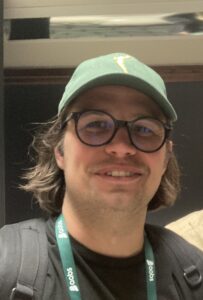
Fred Gregor Rahuoja is a graduate student in the Scandinavian Area Studies program of the University of Washington. His primary research interest is low resource language modeling with computational methods. In addition to teaching his native Estonian, he studies Python, Kazym-Khanty, and Norwegian.
Janis Sarnovics: "Civilian Participation in the Latvian War of Independence during the Bermondt Campaign, October–November 1919"
The AABS Travel Grant was instrumental in facilitating my participation in the conference, providing essential financial support that enabled attendance and active engagement in a high-level international academic environment.
Participation in the conference significantly contributed to my professional development as an early-career researcher. The event offered an opportunity to present and discuss research findings with experts in the field, receive valuable feedback, and gain insights into recent theoretical and methodological developments relevant to my research area. Exposure to a broad range of scholarly perspectives enhanced my understanding of current debates and emerging directions within the discipline.
Importantly, the conference served as an exceptional platform for expanding my academic network. It brought together researchers not only from the Baltic region but also from leading universities and research institutions in the United States and other countries. This international dimension created valuable opportunities for scholarly exchange, enabling discussions with researchers whose work is directly related to my own research interests. Such interactions facilitated the establishment of professional connections that may lead to future collaborations, joint research initiatives, and knowledge exchange across institutional and national boundaries.
Beyond the formal conference sessions, participation in networking events and informal discussions provided additional opportunities to engage with members of the international research community. These interactions facilitated the exchange of ideas, experiences, and best practices, contributing to a deeper understanding of the broader academic landscape and strengthening my integration into the scholarly community.
Overall, the Travel Grant substantially enhanced the value of my conference participation by making it possible to engage with an internationally diverse group of scholars, establish new academic contacts, and further develop my research profile. The knowledge gained and professional connections established during the conference will continue to shape my future research activities and academic collaborations.
I would like to thank the organizers and supporters for this opportunity. Without their support, this experience would not have been possible.
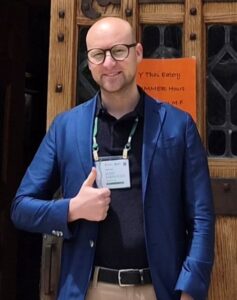
Janis Sarnovics is a doctoral student in History at the Faculty of Humanities of the University of Latvia and an acting research assistant at the Department of History and Archaeology. His research focuses on twentieth-century military and political history with a particular focus on the Latvian War of Independence (1918–1920).
Jekaterina Maadla: "Will this Doctor Speak my Language? Linguistic Accommodation Practices in Estonian Healthcare"
I would like to sincerely thank the sponsors of this conference for awarding me this scholarship and supporting my participation in the 30th Biennial Conference of the Association for the Advancement of Baltic Studies.
At the conference, I presented my research on linguistic accessibility in Estonian healthcare, focusing on how language discordant patients navigate healthcare services and manage communication barriers in multilingual healthcare encounters. When applying, I was slightly intimidated by the conference’s broad interdisciplinary scope, but I did not expect to meet many researchers working on topics related to my own rather narrow and underexplored field. However, I was pleasantly surprised by the interest my presentation received.
Beyond the formal sessions, networking opportunities during luncheons, meet-and-greet events, and informal discussions were equally valuable. As funding opportunities in the humanities are often limited, interdisciplinary collaboration is increasingly important, and such informal encounters are often where future projects begin. The conference allowed me to connect with researchers whose interests intersect with my own and to identify possibilities for future collaboration. I could not even imagine that courses about the Baltics can be taught in India, but Professor K.B. Usha from Jawaharlal Nehru University in New Delhi broadened my understanding of the role our small countries play in the international arena.
I would especially like to thank the organisers, and personally Aimee Herring for creating so many opportunities for graduate students to meet, exchange ideas, and build professional networks. These encounters were both inspiring and motivating. The quality of the event was exceptional, and I will certainly share information about AABS conferences and grants with fellow PhD students at Tallinn University.
I would like to point out Dr. Indra Ekmanis’s observation that Baltic Studies may seem a small field, but its reach is large. The conference demonstrated exactly this spirit. Events such as AABS help create a shared sense of belonging to the Baltic region.
Finally, I would like to acknowledge the University of Illinois for providing such an excellent setting for academic exchange and community building. The campus offered a welcoming environment for both intellectual and personal connections. And even the squirrels seemed to enjoy spending time around the library.
I am deeply grateful for this support, which made my participation in this event possible.
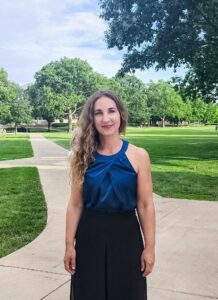
Jekaterina Maadla is a Junior Researcher and PhD candidate in Translation Studies at Tallinn University, Estonia. Holding a master’s degree in conference interpreting, Maadla has over ten years of experience working as an interpreter and interpreter trainer for both public and private institutions. Her research interests include linguistic rights, multilingual healthcare communication, public service interpreting, and interpreter training.
Laima Vincė Sruoginis: Roundtable on Heritage, Connection, Writing and "Literary Echoes from the First Wave of Lithuanian Migration to the United States"
I am deeply grateful for the AABS Travel Grant that enabled me to attend the 2026 conference on the Baltic Diaspora held at the University of Illinois – Urbana – Champaign. This grant enabled me to present a 90-minute roundtable discussion of my recently published academic book, Heritage, Connection, Writing: Conversations with North American Diaspora Writers (Peter Lang International Academic Publishers, 2026), which was the culmination of my research as a postdoctoral researcher at the Vytautas Magnus University Institute for Lithuanian Emigration Studies (2024-2025). The roundtable opened with the Peter Lang International Academic Publishers Exile Studies series editor, Andrea Hammel, delivering an excellent talk on the birth and concept of the Exile Studies series and then how my two academic monographs, Vanished Lands and Heritage, Connection, Writing fit into the series thematically. I then read my paper, “Notes from a Vanished Land” and spoke about the book’s structure and overarching themes. Then, two writers featured in Heritage, Connection, Writing, Canadian writer Antanas Sileika and Litvak American writer Malachi Black, shared their comments and insights over zoom. Then followed comments and discussion by three Chicago area Lithuanian diaspora writers featured in the book: Daiva Markelis, Audrė Budrys, Kęstutis Nakas. Finally, Joselyn Bartkevičius commented on her experience of participating in the interview process that led to the creation of this book. The roundtable was a success and, I feel, an important contribution to the topic of Baltic diasporas.
The travel grant also enabled me to present my lecture, “Literary Echoes from the First North American Lithuanian Diaspora” as part of a panel on Diaspora literature titled, “Diaspora Literatures and Identities: From Migration to Homecoming” (Literature, Linguistics, and Cultural Studies). My presentation and the other three presentations offered unique perspectives on the Baltic diaspora throughout the twentieth and twenty-first centuries. I also moderated the panel “Literature, democracy, and inclusionary practices” Saturday morning about Diaspora literature in Estonia and Lithuania and how social media and technology can be used to broaden the reading audience.
Although I am older than your typical postdoctoral researcher, I started my academic work in the field of Lithuanian diaspora literature quite late in life, after teaching Creative Writing for many years as an Adjunct Professor at the University of Southern Maine and raising three children. The temporary gap in employment that I am experiencing since I completed my postdoc in January made it difficult financially for me to travel to the conference. Therefore, I am so grateful for the understanding and support for my academic career that I have received from AABS. Once again, thank you.
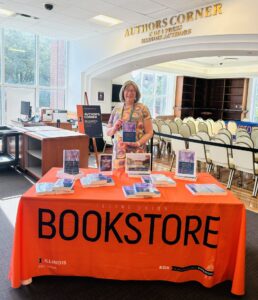
Laima Vince Sruoginis is a writer who in 2022 earned her PhD in Humanities from Vilnius University. She was a postdoctoral researcher at the Vytautas Magnus University Lithuanian Emigration Institute from January 2024 to January 15, 2026. Her postdoctoral research project culminate with the publication of the book “Heritage, Connection, Writing: Conversations with North American Lithuanian Diaspora Writers” and several articles on literature by Lithuanian diaspora writers.
Robert Varik: Multilateral Diplomacy and the Baltic states: Integration into the Western-centric Global Order, 1990s-2000s
The AABS travel grant enabled my participation in the 2026 Baltic Studies conference at the University of Illinois in Urbana-Champaign. I presented in a roundtable discussion titled “Multilateral Diplomacy and the Baltic states: Integration into the Western-centric Global Order, 1990s-2000s.” Together with Mart Kuldkepp, Timo Aava, and Kaarel Piirimäe, I presented my research on Estonian accession into the Council of Europe in the early 1990s and explored the factors contributing to the success of Estonian foreign policy during this period. The discussion engaged approximately 15 participants from across the globe, who posed thoughtful questions and offered valuable feedback.
The most rewarding aspect of the conference, for me, was the opportunity to meet and develop connections with talented Baltic scholars from around the world. During the formal panels, breaks between sessions, and social events, I was able to introduce my research and become acquainted with colleagues whose work I had previously known only through publication. I was particularly pleased by the welcoming and collegial atmosphere common throughout the conference, both across different research areas and between scholars of different career stages. This collegiality is something I greatly appreciated as an early-career researcher. Indeed, several conversations have already yielded promising prospects for future collaboration. I learned, for instance, that Finnish scholars are pursuing research on visions of the future during the late tsarist period, a topic that closely parallels my own work on the same question in the Baltic provinces during this era.
The travel grant proved essential to my participation. Without it, the financial burden of transatlantic travel from Italy, combined with rising costs, would have made attendance unlikely. I am deeply grateful for both the financial support and the intellectual community that AABS provides to early-career scholars like myself.
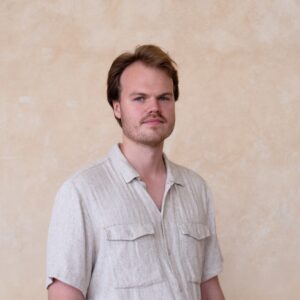
Robert Varik is a PhD researcher at the European University Institute in Florence, Italy. His thesis will focus on the late Tsarist period in Baltic intellectual history. Varik’s interests include modern Baltic history as a whole from the early 19th century through to the 21st century.