
The Association for the Advancement of Baltic Studies is pleased to recognize Anna Herran Matimaitytė for the successful completion of her AABS Dissertation Grant, awarded in 2026.
AABS awards grants of up to $4,000 to support doctoral dissertation research and write-up in any field of Baltic Studies. Funds may be used for travel to research site, equipment, duplication or other needs as specified.
Herran used the grant to support her doctoral dissertation project, “Contested Memories Worth a Century: The Interwar Period as a (un)usable past in the Czech lands and Estonia 1918-2018.” She provided a report at the conclusion of her research, which we publish below with light editing.

Anna Herran is a Doctoral Candidate in History at the University of Toronto, interested in the connections among history, memory, and statehood in 20th-century East Central Europe and the Baltic region. Her PhD Dissertation, “Contested Memories Worth a Century: The Interwar Period as a (un)usable past in the Czech lands and Estonia 1918-2018,” examines how the national holidays commemorating the creation of the Estonian Republic (February 24, 1918) and the First Czechoslovak Republic (October 28, 1918) have been officially commemorated from the establishment of the interwar republics to the centenary celebrations in 2018 to understand how different governments throughout the 20th century contested, reinterpreted, rejected, or appropriated elements and symbols of the interwar period to strengthen their political legitimacy, and what the long-term consequences of these choices were.
Independence in the Archives
Dissertation Grant Report from Anna Herran
The AABS Dissertation Grant was instrumental in furthering the archival research and fieldwork required for my dissertation “Contested Memories Worth a Century: The Interwar Period as a (un)usable past in the Czech lands and Estonia 1918-2018,” which compares how Estonian and Czech societies have celebrated the days commemorating the creation of their respective republics during the interwar period and how these celebrations have transformed over time. During my research stay in Estonia in September and October 2026, I focused on the commemorations of February 24 since 1991, particularly around the 90th and 100th anniversaries in 2008 and 2018, respectively.
Being based in Tallinn granted me access to several documents and recent newspapers, magazines, and other printed materials, which, despite being “digitized,” are only available for consultation on specific computers at research libraries mainly in Tallinn and Tartu. Having access to the Tallinn University Academic Library provided an ideal space for research and a much more comfortable experience than the small national library office at the Solaris shopping mall. Additional advantages of being in place included chance encounters with monuments and museum exhibitions, such as the Konstantin Konik statue next to the Tartu University Library or the ongoing exhibition at the People’s Museum on everyday life in the interwar city, which turned out to be quite helpful in thinking through my current chapter subsection on narratives of consumption and lifestyle in exhibitions related to the interwar republic. For this section of the chapter, I also conducted research at the Estonian History Museum library, where I consulted the catalogues of previous museum exhibitions.
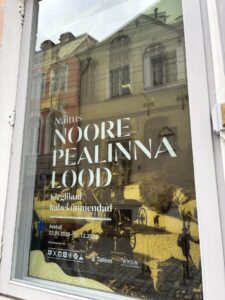
The ongoing exhibit on interwar Tallinn at the Tallinn People’s Museum
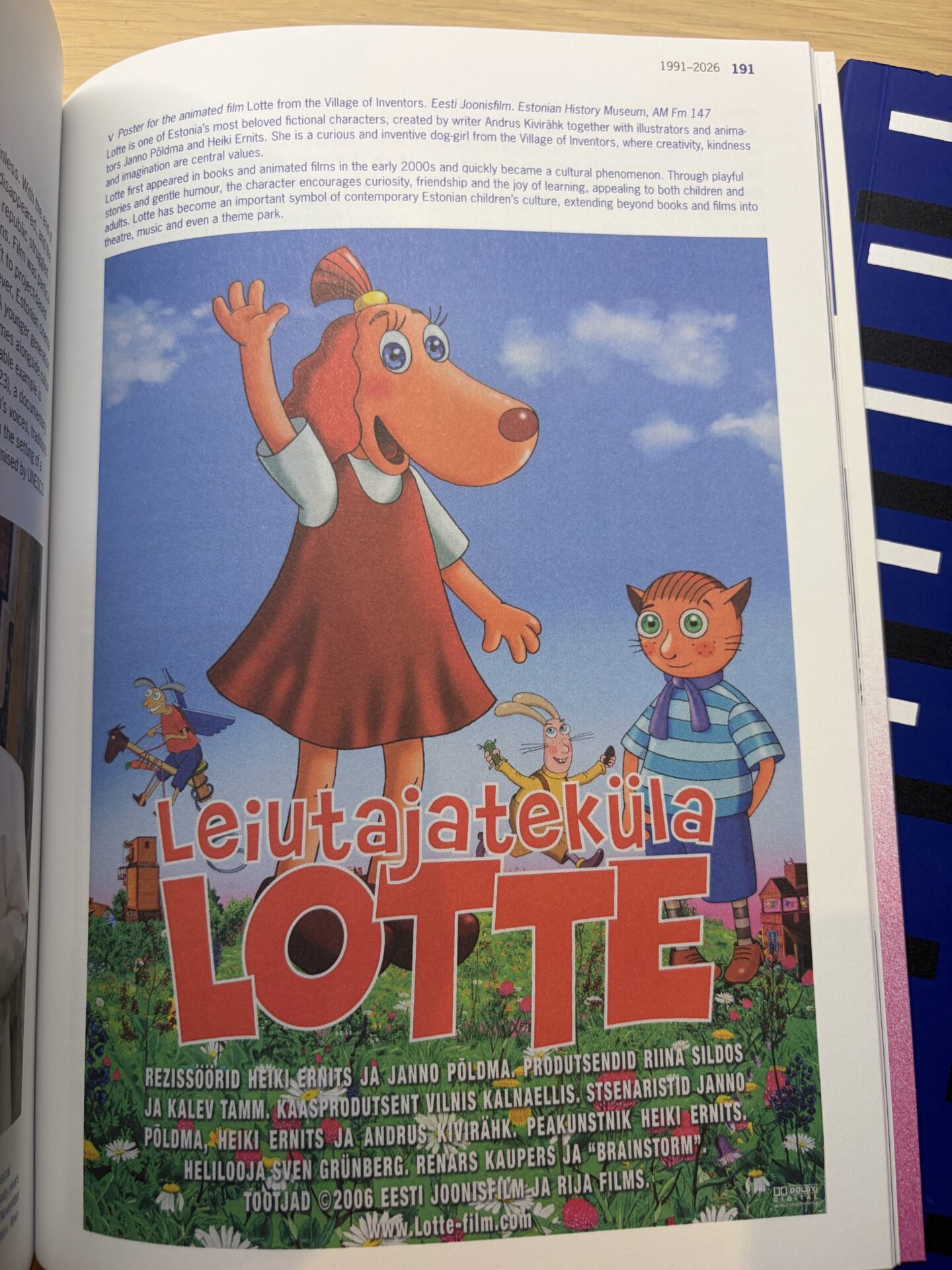
Picture from the English-language catalogue of the Estonian History Museum’s permanent exhibition.
I developed the idea for this chapter during my stay in Tallinn following a very productive and thought-provoking discussion with current history PhD students at Tallinn University’s School of Humanities. The discussion followed the presentation of a paper based on the first subsection of my current chapter, titled Celebrating the Republic like Cats and Dogs: Representations of Independence Day Celebrations in Contemporary Czech and Estonian Animated Short Films. This paper compares the 2008 Estonian animated series Leiutajateküla – Eesti 90 with a similar Czech cartoon to illustrate how celebrations of national holidays in the two countries are represented in popular culture and how narratives of the interwar period are overtly incorporated in these representations, if at all.
While I had initially planned to develop this chapter around the idea of educational materials, the discussion with the students at Tallinn University raised questions on the expectations and reality of celebrating February 24 in present-day Estonia, which inspired me to approach the chapter differently and to include elements I had identified in the Czech side of my research but had not quite considered for the Estonian side. For this, I am very grateful to the students who attended my talk on September 17 and especially to Dr. Karsten Brüggemann for the invitation to present at his seminar and for all his support during my stay in Estonia.
Writing a thesis subsection on cartoon dogs may seem extremely unserious. However, the archives and museum catalogues constantly reminded me that Lotte is indeed a cultural phenomenon of post-1991 Estonia.
In addition to Tallinn and Tartu, I also conducted research in Pärnu, specifically at Pärnu Museum. There, I had the opportunity to attend a guided tour of the section of the new permanent exhibition that deals with Pärnu’s role in the Declaration of Independence. The tour was conducted by Kristiina Vunk, researcher and curator of this section of the exhibition, who, in addition to answering all of my questions regarding commemorative events organized by the museum in recent years, also provided extensive information on relevant sources from the museum’s collections and beyond, particularly concerning the place of the Pärnu manifesto in Estonia’s cultural memory more broadly. Pärnu’s double identity as the birthplace and summer capital of Estonia has fascinated me since my very first visit to the city in 2023, and ever since I had wanted to write at least one subsection dedicated to it. Thanks to the invaluable help of Ms. Vunk and of Krista Visas, director of the Pärnu Central Library, who coordinated the meeting, this will be possible.
In addition to archival documents and newspapers, Tallinn University’s library provided me with access to primary and secondary sources I had not previously been able to obtain, not even through my library’s interlibrary loan service!
While my time in Estonia is over for now, I will be returning at the beginning of November to finalize archival research for a different chapter. I will also be presenting an updated version of the Celebrating the Republic like Cats and Dogs paper, this time to students of Czech language and culture at the University of Helsinki, where I look forward to gaining new perspectives on both the Estonian and Czech sides of my research. In the meantime, I will be based in Prague, working on the Czech side of my research and completing the current chapter, which I hope to present at the CBSE Conference next summer in Tartu.
– Anna Herran, 2026
Anna Herran
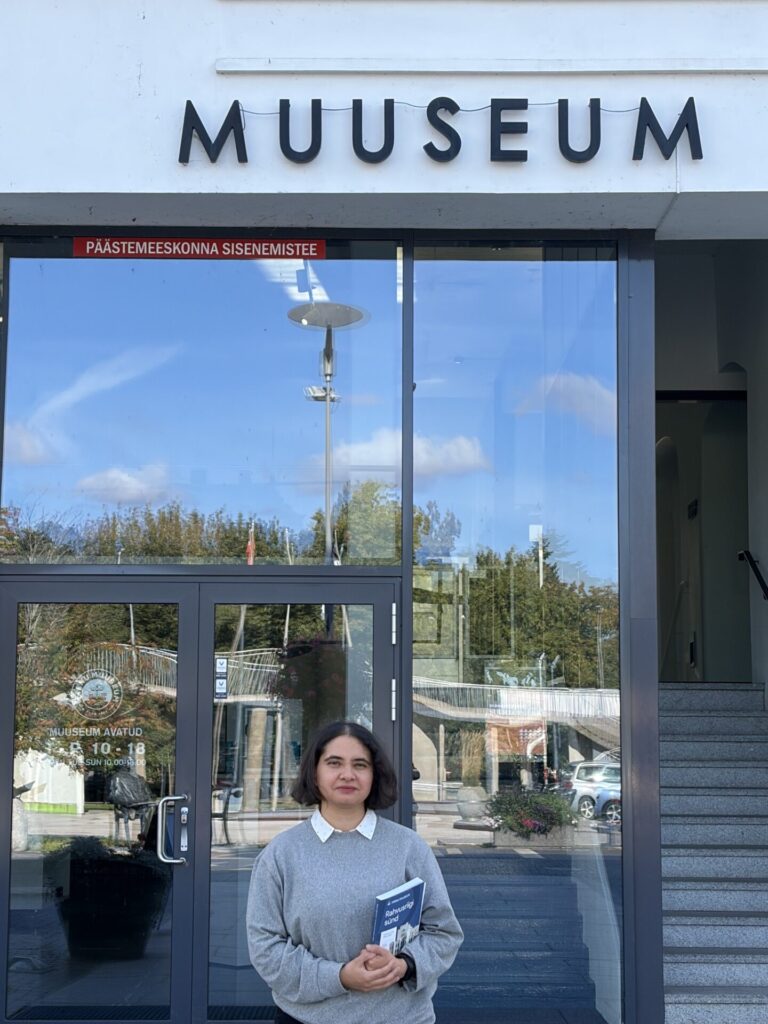
Research visit to Pärnu Museum in September 2026
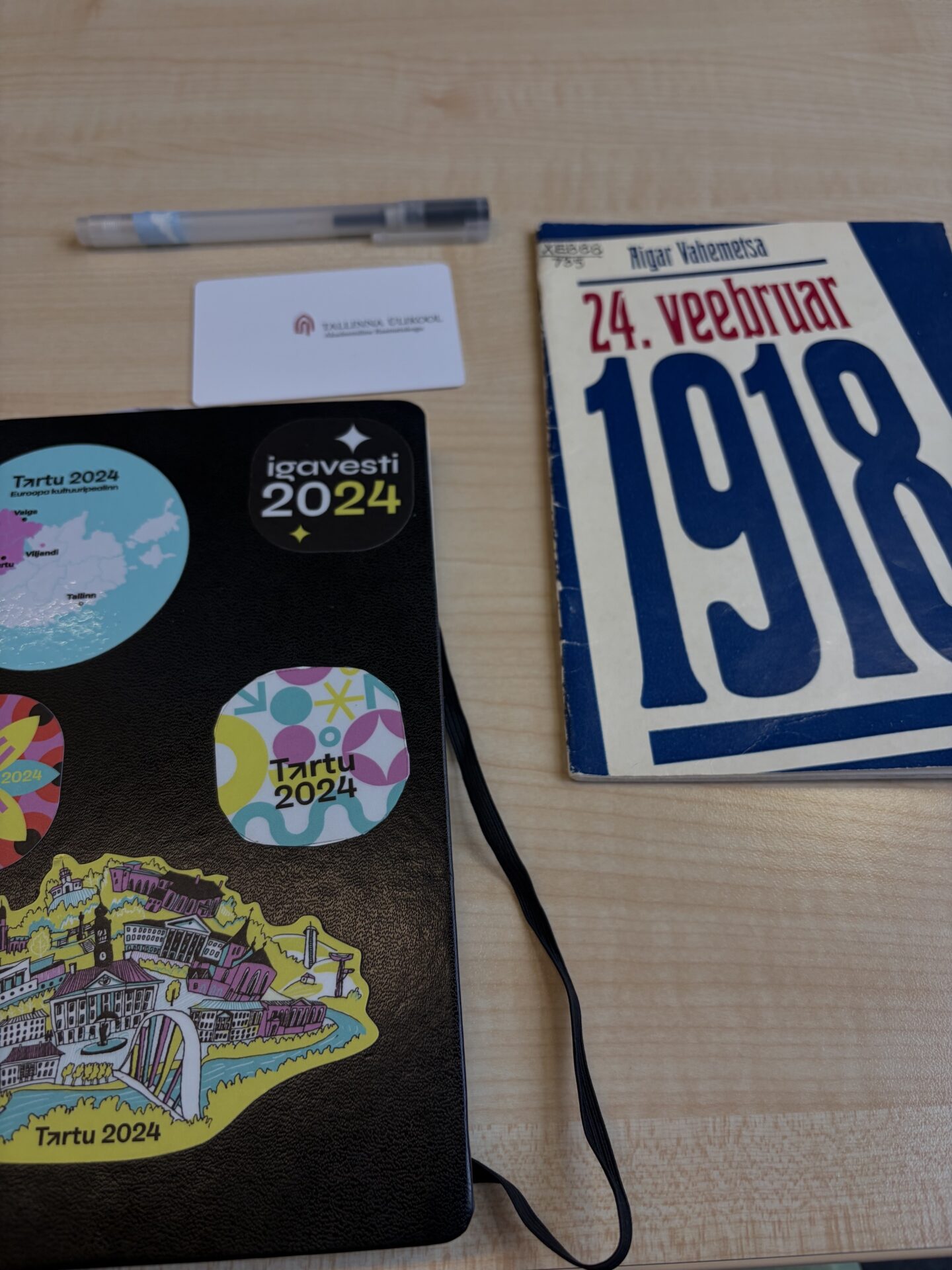
At work in Pärnu