
The Association for the Advancement of Baltic Studies is pleased to recognize Holger Mölder for the successful completion of his AABS Academic Events and Projects Grant, awarded in 2026, to support the workshop “The end of democracy? Is the populist wave unstoppable?”
The AABS Grant for Academic Events and Projects of up to $5,000 is available for any academic event or scholarly project that promotes Baltic Studies.
The “End of Democracy” workshop took place in Tallinn in June 2026 and was a thorough success. Mölder provided a report after the event, which we publish below with light editing.
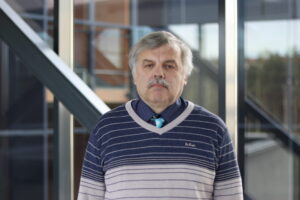
Dr. Holger Mölder is Associate Professor in International Relations and International Security Studies at the Tallinn University of Technology, School of Business and Governance, Department of Law, leader of the research group “International Relations, security, law and technology” at TalTech and Visiting Professor at the University of Tartu. Before he worked for 20 years (1995-2015) at the Estonian Military Academy and the Estonian Ministry of Defense. In 2010, Mölder received a Doctorate in Political Science from the University of Tartu. In his research, he focuses on various international security and international relations issues, including cognitive warfare, influence and information operations, cyber security, United States, European & Baltic security, political cultures, and strategic risk & threat analysis.
The End of Democracy?
Academic Events and Projects Grant Report from Holger Mölder
In cooperation with Tallinn University of Technology and Stanford University, an international workshop was held at the Vabamu Museum of Occupations and Freedom in Tallinn on 29–30 June, 2026. This event was a follow-up to an international workshop “Global Knowledge Warfare after Russia’s Invasion of Ukraine: Strategic Narratives, Strategic Competition and Global Order” that was held at Stanford University in April 2023.
The workshop in Tallinn was free and open to the public. Recordings of the full event are available below. The main objectives of the workshop were:
- to foster dialogue on the future of liberal democracy among scholars and practitioners;
- to analyze the current processes taking place in Ukraine and Russian Federation;
- to discuss the future of international law based order, and its relationship to the Baltic countries.
Welcome addresses were delivered by Tiit Land, Rector of Tallinn University of Technology, and Ivo Lille, CEO at Vabamu Museum of Occupations and Freedom.
The workshop consisted of four presentations and discussions:
- Keynote presentation “Autocrats vs. democrats: China, Russia, America and the new global disorder?” by Michael McFaul (Stanford University). Dr. McFaul was introduced by Toomas Hendrik Ilves, President of Estonia (2006-2016).
- Discussion “The future of democratization in the age of populism” between Larry Diamond (Stanford University) and Steven Livingston (George Washington University). The conversation was moderated by Holger Mölder (Tallinn University of Technology).
- Roundtable discussion “The implications of the war in Ukraine on Russian and Ukrainian societies” with Eric Shiraev (George Mason University), Edward Lucas (Baltic International Security Centre), Jason Smart (Kyiv Post) and Timothy Less (University of Cambridge). The conversation was moderated by Raivo Vare (Estonian Council of Foreign Relations).
- Roundtable “The future of international legal order – in memoriam Tanel Kerikmäe” with Charles Szymanski (Syracuse University, University Bialystok), Agnes Kasper (Tallinn University of Technology, CCDCOE) and Archil Chochia (Tallinn University of Technology’s Law School). The moderator was Katrin Nyman-Metcalf (Tallinn University of Technology).
All presentations and panel discussions were followed by active Q&A sessions. The workshop demonstrated the relevance of democracy-related issues to the Baltic scholars. Despite being a summer event, it was attended by close to 100 participants. The workshop focused on brainstorming and open discussion about the current political realities and how they might change in the future given the rapid social and technological shifts. It also explored how the rise of AI is shaping political perceptions and misperceptions.
Panels 1 and 2
Panels 3 and 4