
AABS is pleased to congratulate Timo Aava for the completion of the Emerging Scholars Grant (awarded 2024) associated with his book manuscript on the theory and practice of non-territorial autonomy in Estonia.
Aava used the Grant to conduct primary source research and devote time to writing at Harvard University in the United States. He shared his thoughts with AABS, which we have lightly edited and published below.

©Timo Aava, 2024
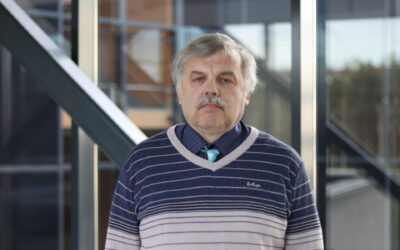
Dr Timo Aava is a historian focusing on intellectual history and the history of minority rights in Estonia in the first half of the twentieth century. He has held post-doctoral and visiting appointments at the Hebrew University of Jerusalem, Yale University, the London School of Economics and Political Science, Harvard University and the University of Tartu. In 2025-2026, Aava will be a visiting fellow at the University of Oxford. Aava holds a doctoral degree in history from the University of Vienna.
Time for Research, Writing, and Reflection
Emerging Scholars Grant Report from Timo Aava
My main goal at Harvard was to work on my book manuscript on the history of minority rights in Estonia in the first half of the twentieth century. My research stay there, together with the funding from AABS, helped me to make considerable progress towards finishing the manuscript. I mainly worked on four chapters during my stay. I finalised one, which was in progress (the international arena), fully finalised two (authoritarianism and diaspora activism) and am close to 90% work done on the last chapter of the workflow (autonomy discourse between 1900-1917). The work mainly entailed considerably shortening the chapters, making them clearer and strengthening the core arguments of the chapters and book.
One of the main challenges was to find the key to rewriting the autonomy discourse chapter, and the time at Harvard enabled me to work out the main theme around which to build this chapter. My work on the book manuscript also enabled me to move towards the conceptual clarity of the book, as well as put it more strongly into dialogue with more recent literature or literature that I had not engaged with in the manuscript before. Previously, when I started turning my dissertation into a book manuscript, I divided the manuscript into separate files; I now amalgamated individual chapters into one file, which gives me a better overview of the entire project.
The next steps of the work plan include consolidating the entire manuscript, tying it into a whole with introduction and conclusion as well as technical work before submitting it to the publisher (mainly proofreading, later also index etc). I also managed to integrate several useful primary sources that I collected in London at the beginning of this year.
Work on my book manuscript and thinking about future research was greatly facilitated by the excellent library resources and access to various scientific databases. I collected and worked on a large amount of research literature, both for my book project and my research interests more broadly. I also worked with primary sources available at Harvard libraries, such as some Jewish history-related documents, as well as some microfilm copies from the State Department on the history of interwar Baltic states.
As expected from the visiting researchers at the Center, on April 21, I held a public talk entitled “Minorities, Rights, and the State: The Theory and Practice of Non-Territorial Autonomy in Early Twentieth-Century Estonia” in the New Research on Europe series. I got useful feedback from the discussant Professor Derek Penslar and other visiting researchers, as well as broader visibility for myself as an emerging scholar and for my book project. The possibility to discuss my book project also helped me to think about the broader framing and concept of the book, and feedback from some visiting researchers proved here particularly relevant.
I also actively participated in various events on campus, such as the regular New Research on Europe seminars where visiting researchers present, talks organised by the Davis Center, talks organised by the Kennedy School, as well as many other events taking place almost daily (e.g. the history of fascism and democracy series). I also established contacts during my term at Harvard, such as with visiting researchers in my cohort, resident faculty, PhD students and so forth.
As an early career scholar, I also worked on the next steps of my work. I secured a fellowship at Oxford University for the next academic year and started planning it. I also worked on the preparations for another project that I will start working on at the University of Tartu.
– Timo Aava, 2025
Timo Aava
What is the Emerging Scholars Grant?
The Research Grant for Emerging Scholars is an award for up to $6,000, to be used for travel, duplication, materials, equipment, or other needs as specified. Proposals are evaluated according to the scholarly potential of the applicant and the quality and scholarly importance of the proposed work, especially to the development of Baltic Studies. Applicants must have received their PhD within the last ten years. Applicants must be AABS members at the time of application.
Other Grants and Fellowships News

Documenting the Early Latvians of Philadelphia: Baumanis Grant Report from Peter Dajevskis
AABS is pleased to congratulate Peter Dajevskis for completing his project "Seeking New Beginnings, 1890-1910: The Free Letts," for which he received the Baumanis Grant for Creative Projects in Baltic Studies. Dajevksis and director Māra Pelēcis delved into the...

Justina Smalkytė Awarded JBS Publication Development Gran
The Association for the Advancement of Baltic Studies is pleased to announce that Justina Smalkytė has been awarded the 2026-2027 Journal of Baltic Studies Publication Development Grant to support her research on Jewish defendants tried in Soviet-occupied Lithuania....
Holger Mölder Awarded 2026-2027 Academic Events and Projects Grant
The Association for the Advancement of Baltic Studies is pleased to announce that Holger Mölder has been awarded a 2026-2027 Academic Events and Projects Grant to support the workshop “The end of democracy? Is the populist wave unstoppable?” scheduled for June 30,...
Renew your membership or join for 2023 online or by mail.
Donate
Contribute to the Baltic Studies Fund (BSF) or AABS program expenses to ensure the future well-being of AABS.
Connect with AABS
Find AABS on the following networks
Newsletter
Lokal_Profil (CC BY-SA 2.5) | © 2022 The Association for the Advancement of Baltic Studies (AABS) | A member of the American Council of Learned Societies