
The Association for the Advancement of Baltic Studies is pleased to announce its selection of two Journal of Baltic Studies (JBS) articles to receive the 2024 and 2025 Vilis Vītols Article Prize, and a third to receive an Honorable Mention.
Karl Stuklis has been awarded the 2024 Prize for his article, “Revisionist national narratives in the memoirs of Estonian and Latvian Waffen-SS Legionnaires,” published in JBS 55:1.
Erfan Fatehi, Juha Herkman, Joonas Koivukoski, and Liisi Laineste have been awarded the 2025 Prize for their article, “National identity through the prism of satire: humor scandals in Estonia 1991–2022,” published in JBS 56:4.
Ingrid Ruudi has been awarded an Honorable Mention for her article, “Tallinn’s Freedom Square as a heterogeneous public space,” published in JBS 56:2.
The Vītols annual award of $500 is presented to the author of the best article in a given year of the Journal of Baltic Studies. The best article is selected by a committee appointed by the AABS board. Priority is given to articles that encompass more than one Baltic country and thus expressly represent Baltic Studies. The winners of the Vilis Vītols Article Prize are announced once every two years.
AABS congratulates the winners and honorable mentee of the 2024 and 2025 Vītols Prizes and thanks all scholars who continue to publish articles and book reviews in JBS.
Karl Stuklis
Stuklis, K. (2024). Revisionist national narratives in the memoirs of Estonian and Latvian Waffen-SS Legionnaires. Journal of Baltic Studies, 55(1), 197–215. https://doi.org/10.1080/01629778.2023.2173262
Aiming to shed light on the underrepresented Baltic experience of World War II, this article examines how memoirs written by Estonian and Latvian Waffen‑SS Legionnaires after the collapse of the Soviet Union construct revisionist national narratives that justify military collaboration with Nazi Germany. Attribution theory and the concept of nodal points of discourse are used to analyze how these veterans explain their wartime choices, portray key actors, and position their nations within broader European memory debates.
Through close reading of six memoirs, Estonian and Latvian authors are shown to consistently frame their service as a patriotic, defensive struggle against Soviet aggression, often invoking the “separate war” thesis to distance themselves from Nazi ideology and the Holocaust. The memoirists attribute positive, active motivations—such as patriotism, martial values, and anti‑communism—to themselves, while depicting the Soviet Union as driven by expansionism and a desire for destruction. At the same time, they downplay or omit local collaboration in genocide, appropriating the suffering of other victimized groups and presenting their nations as inherently European and unjustly torn from their natural independence by the Soviet Union.
The article concludes that these memoirs collectively advance a revisionist interpretation of World War II that aligns with dominant post‑Soviet national narratives in Estonia and Latvia. By emphasizing Soviet crimes, minimizing Nazi atrocities, and portraying the legionnaires as victims rather than perpetrators, the texts contribute to a broader regional trend that seeks to equate fascism and communism within European memory politics. This narrative strategy supports the argument that the collective memory of the contemporary Baltic states is based upon a revision of established Western narratives of World War II and the Holocaust, with significant implications for how Europe understands the legacies of occupation, collaboration, and genocide.

Karl Stuklis is a final-year PhD student and graduate teaching assistant in Central and Eastern European Studies at the University of Glasgow. His thesis explores the role of vicarious identification in British, German, and Latvian foreign policy responses to the 2022 Russian invasion of Ukraine. Karl is an editorial assistant at the Journal of Baltic Studies and committee member of the BASEES Study Group on the Baltic States. His latest article is “How the War in Ukraine Strengthened Latvia’s European Credentials and International Standing” (E-International Relations, 2025).
Erfan Fatehi, Juha Herkman, Joonas Koivukoski, and Liisi Laineste
Fatehi, E., Herkman, J., Koivukoski, J., & Laineste, L. (2025). National identity through the prism of satire: humor scandals in Estonia 1991–2022. Journal of Baltic Studies, 56(4), 705–726. https://doi.org/10.1080/01629778.2025.2460503
The article studies humor scandals in Estonia from 1991 to 2022 as sites of public contestation where laughter turns into a public test of identity, memory, politics, and acceptable speech. Using a mixed method design, the authors first map 107 possible cases through Estonian media archives, narrow them to 31 serious candidates, and finally identify ten national humor scandals that met their standard of sustained coverage in at least two major national media outlets. The study contends that humor scandals cannot be reduced to transient media episodes, emphasizing their deeper social and cultural implications, as they make visible what Estonian society treats as inviolable, sensitive, or still politically charged.
The main finding is that Estonian humor scandals have grown more common over time, especially in the 2010s, but they remain fewer than in larger neighboring media systems such as Finland. The increase appears linked to media liberalization and digitalization, greater exposure to transnational controversies, intensified political discourse, and the continued sensitivity of national identity in post-Soviet Estonia. Traditional media, especially television and journalism, played a major role in turning jokes into scandals, even as social media helped speed up public reaction. The most common norm breakers were comedians, satirists, cartoonists, and media figures, and the usual response was apology rather than legal punishment.
The analysis links Estonia’s humor scandals to the broader project of identity formation in the post-Soviet era. Four major cases concern Estonian national identity directly: the 2008 Eurovision controversy around Kreisiraadio, Tujurikkuja’s sketch about the MS Estonia ferry disaster, Tujurikkuja’s parody of the patriotic song “Ei ole üksi ükski maa,” and Helsingin Sanomat’s nickname contest for Estonians. These cases suggest that in Estonia, humor directed at collective memory, musical heritage, language, national trauma, and relations with neighboring countries such as Finland frequently transcends entertainment and becomes a matter of public contestation.
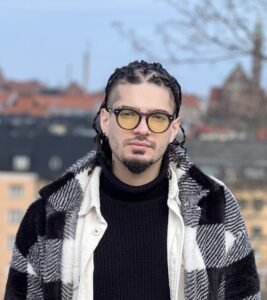
Erfan Fatehi is a Doctoral Researcher in sociology at the University of Helsinki. His dissertation examines the civilizing and de-civilizing processes of humor as they intersect with migration, far-right politics, and globalization. With a background in semiotics, Fatehi pursues an interdisciplinary approach and has published on the implications of semiotic destruction of the meaningful for minorities, psychoanalytic theory, and neoliberal academia.
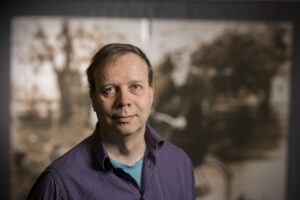
Juha Herkman is a Professor of Media and Communication Studies at the University of Helsinki. Over the past decades, he has conducted extensive research on political communication and the interplay between populism and media. He also has a solid academic background in British cultural studies, with a particular focus on media culture with a side path of humour studies. In addition to publishing a substantial number of articles in prestigious academic journals such as Cultural Studies, Acta Sociologica, Media, Culture & Society, and Journalism Studies, Herkman is the author of A Cultural Approach to Populism (2022, Routledge). He also co-edited Populism, Twitter, and the European Public Sphere (2024, Palgrave) alongside Emilia Palonen.
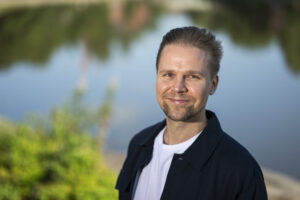
Joonas Koivukoski, PhD, is a Postdoctoral Researcher in Media and Communication Studies at the University of Helsinki. Koivukoski specializes in emerging forms of journalism and political communication. His dissertation (2022) examined political humor in the hybrid media environment, with a focus on humorous online advocacy and the intersections of satire and journalism. Koivukoski’s current research examines war journalism, while forthcoming collaborative projects investigate political podcast audiences and the social stratification of comedy taste and humor. Koivukoski has held fellowships at Temple University (Fulbright) and KU Leuven. His work has been published in journals such as New Media & Society, Journalism Studies, and Alternatives.
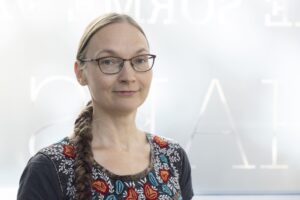
Liisi Laineste is a Researcher Professor at the Department of Folkloristics of the Estonian Literary Museum, where she leads the working group of humour research. Her main research object is folk humor and its online manifestations. She has published articles and edited books and journal issues on ethnic humour, internet folklore and online communication, many of which represent an interdisciplinary angle and combine folkloristics with linguistics, psychology, sociology or communication studies. She has a standing interest in digital humanities.
Ingrid Ruudi
Ruudi, I. (2025). Tallinn’s Freedom Square as a heterogeneous public space. Journal of Baltic Studies, 56(2), 309–329. https://doi.org/10.1080/01629778.2024.2385827
The paper looks at the mental and physical transformations of the Freedom (Vabaduse) square, the main square of Tallinn, over the transition period from Late to Post-Soviet Estonia, analysing the developments as at times antagonistic and conflictual, at times mutually supportive dialogue of architectural and artistic projects and everyday practices. After the square was successfully renamed and thus symbolically ’regained’ in 1989, nothing much visually discernible happened there for the next ten years. Nevertheless the space worked as an arena of constructing and negotiating different public and counterpublic spheres through various projects and interventions from art, architecture and everyday practices.
Architecturally, the decade saw two urban planning competitions (1993 and 1998) with a wide range of propositions; an addition of two office buildings to the square’s farther ends by émigré architects introducing sought-after international know-how and controversial commercial taste; and the renovation of 1934 Art Hall building as a conceptual project of Swiss artist George Steinmann with connotations ranging from return to the golden pre-war age to neocolonialism through European structural aid funds. At the same time, the artistic interventions ranged from an ironic display of Soviet luxury car above the pedestrians’ heads (Toivo Raidmets, 1993) to explorations of urban and psychic subconsciousness in subterranean tunnels (Jaan Toomik, 1993) to a poetic cathedral of the homeless (Raoul Kurvitz, 1999). Artist Tõnis Vint continued his pursuit of urban acupuncture by proposing a 58-metre tower as a Tree of the World and a replacement of the St James Church with a spiritual hall; yet the only amendment the city government was able to accomplish was the painting of colourful flowers on the asphalt (Hannes Starkopf, 1998).
Looking at these projects in dialogue, as they form dense layers of meaning to a precise locus, demonstrate the potential of an urban public space in the construction of the public sphere, as a place for formation and negotiation of different publics and counterpublics. It also enables to grasp the heterogeneity of the era, at the same time highlighting the potency of unexecuted projects and temporary interventions in constructing diverging and competing public spheres. The analysis testifies of the developmental dynamics over the period, with the beginning of the 1990s manifesting more openness, more social antagonisms but also more pragmatic and commercial attitudes, and the end of the decade showing a shift towards concerns of representational and symbolic issues.
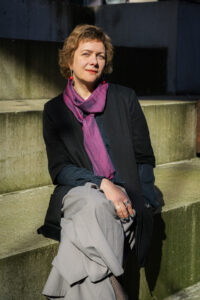
Ingrid Ruudi is a senior researcher at the Estonian Academy of Arts, Institute of Art History and Visual Culture. In 2020 she defended her PhD at the Estonian Academy of Arts with a dissertation Spaces of the Interregnum. Transformations in Estonian Architecture and Art, 1986 – 1994 (cum laude) and spent the autumn semester of 2022 as a Juris Padegs postdoctoral fellow at the Yale University. Her research interests encompass Late and Post-Soviet spatial practices, intersections of architecture and art, architecture as a social and political agent, and gender studies in architecture; currently she is leading in a research grant focused on Late and Post-Soviet Estonian spatial environment from the perspective of ethics of care.
Other Awards & Prizes News
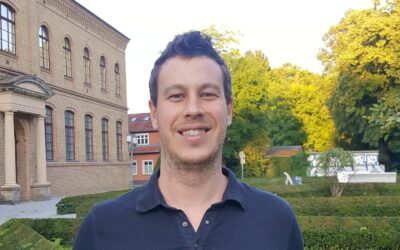
AABS 2026 Book Prize Awarded to Andris Banka
The Association for the Advancement of Baltic Studies is pleased to announce that Andris Banka has been awarded the 2026 AABS Book Prize for his monograph America, the Baltic States and the Making of an Unlikely Security Alliance. The biennial prize of $1,000 is...

Evelina Kukarela Receives 2026 AABS Undergraduate Paper in Baltic Studies Award
The Association for the Advancement of Baltic Studies is pleased to announce Evelina Kukarela as the recipient of the 2026 Undergraduate Paper in Baltic Studies Award for her paper "The Construction of Collective Memory in the Interaction of History and Cultural...

AABS Recognizes Two Students with 2024 Undergraduate Paper in Baltic Studies Award
The Association for the Advancement of Baltic Studies is pleased to announce two 2024 recipients of the Undergraduate Paper in Baltic Studies Award: Linda Ozola-Ozoliņa, for her paper "Latvian environmental term purvs: Problems and solutions in Latvian-English-Latvian...