
AABS is pleased to recognize Roberts Kits for his completion of the 2026–2027 Mudīte I. Zīlīte Saltups Fellowship, a short-term study or research grant for up to eight weeks of study in the United States with a maximum stipend of $10,000. Kits used the Saltups Fellowship to travel to Stanford University in the United States and conduct research for his dissertation on Baltic security. His recap of his experience is available below, lightly edited by AABS.

© Roberts Kits, 2026
Roberts Kits is a PhD student at the University of Latvia’s Faculty of Economics and Social Sciences, where he researches defense innovation in small European states. His work focuses on how countries in the Baltic region govern defense innovation to align it with the evolving threat environment. Roberts is also a defense and security researcher at the Latvian Strategy and Economic Research Institute (LaSER Think Tank). His latest publication examines defense industrial development in Latvia, Estonia, and Lithuania.
Defense Innovation in the Baltic States
Saltups Fellowship Report from Roberts Kits
The Mudīte I. Zīlīte Saltups Fellowship afforded me the opportunity to visit Stanford University as a Visiting Student Researcher at The Europe Center of the Freeman Spogli Institute for International Studies from August 24 to September 17, 2026, where I continued my research as part of my PhD studies at the Faculty of Economics and Social Sciences at the University of Latvia.
During my stay, I worked on an article titled “Innovating in the Gray Zone,” which focuses on a timely and urgent aspect of the security and resilience of the Baltic states: the growing pressure on critical infrastructure through sabotage, subversion, and other tactics within the war-peace spectrum. As this pressure grows and public authorities struggle to monitor every potential risk on their own, civic engagement in reporting suspicious activities becomes a key element in building resilience against these emerging threats. Considering that individuals and public agencies have different concerns and reasons for defining user needs as well as for accepting innovative reporting technology, I map what aspects need to be considered when developing such a reporting mechanism and analyze existing reporting tools in the Baltic states against these considerations.
An important part of my visit was working with the excellent variety of books and materials at the Cecil H. Green Library. Although my research is situated within the field of political science and international relations, this visit allowed me to deepen my understanding of military history and the organizational and technological dimensions of defense innovation, as well as to explore economics literature on interactive learning among various actors within national systems of innovation. I believe that this blend of materials will strengthen the interdisciplinarity and theoretical rigor of my future research.
Visiting Stanford University was an excellent opportunity to meet with world-renowned social scientists. Learning from their comments and assessment of the problem I study benefited my research process. Moreover, I met several security-related practitioners, such as former military officers, diplomats, and officials of international organizations, who shared their perspectives on how to make my research practically useful. Furthermore, my time at Stanford was a great opportunity to connect with researchers from the Baltic states and those who focus on the region, and to explore potential synergies. Finally, I attended a book presentation organized by the Carnegie Endowment for International Peace and joined a discussion on the future of warfare and the role of technology in it.
Alongside academic endeavors, time in California was also a wonderful opportunity to engage with the Latvian diaspora. Not only did I meet many Latvians living in the U.S. and visit the Latvian Hall in San Francisco, but I also participated in a seminar organized by the Northern California Latvian Association devoted to the 2026 parliamentary election in Latvia, where I shared my expertise and insights to encourage citizens abroad to cast their vote.
In conclusion, the Saltups Fellowship enabled me to spend time at Stanford University, which was an important step in my pursuit of a PhD. The access to library resources, the conversations with scholars and practitioners, and the connections with fellow Baltic researchers have broadened my perspective and given me valuable direction for the next stages of my work. I am confident that the insights gained during this visit will strengthen my upcoming article as well as my PhD research as a whole. I would like to express my sincere gratitude to the Association for the Advancement of Baltic Studies for this opportunity.
– Roberts Kits, 2026
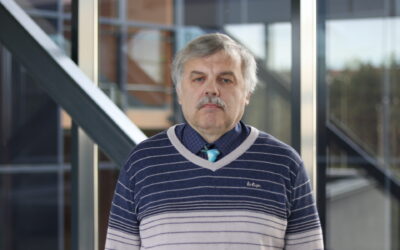
Roberts Kits
What is the Saltups Fellowship?
The Saltups Fellowships are short-term study or research grants for up to eight weeks of study in the United States with a maximum stipend of $10,000.
The grants are funded from a bequest in memory of Dr. Mudīte I. Zīlīte Saltups. Dr. Saltups’ will provides that recipients of a fellowship must be citizens of the Republic of Latvia, speak Latvian, have their permanent residence in Latvia, and come to the United States to study or conduct research.
Other Grants and Fellowships News
The End of Democracy? Academic Events and Projects Grant Report from Holger Mölder
The Association for the Advancement of Baltic Studies is pleased to recognize Holger Mölder for the successful completion of his AABS Academic Events and Projects Grant, awarded in 2026, to support the workshop "The end of democracy? Is the populist wave unstoppable?"...

Documenting the Early Latvians of Philadelphia: Baumanis Grant Report from Peter Dajevskis
AABS is pleased to congratulate Peter Dajevskis for completing his project "Seeking New Beginnings, 1890-1910: The Free Letts," for which he received the Baumanis Grant for Creative Projects in Baltic Studies. Dajevksis and director Māra Pelēcis delved into the...

Justina Smalkytė Awarded JBS Publication Development Grant
The Association for the Advancement of Baltic Studies is pleased to announce that Justina Smalkytė has been awarded the 2026-2027 Journal of Baltic Studies Publication Development Grant to support her research on Jewish defendants tried in Soviet-occupied Lithuania....