
AABS is pleased to congratulate Peter Dajevskis for completing his project “Seeking New Beginnings, 1890-1910: The Free Letts,” for which he received the Baumanis Grant for Creative Projects in Baltic Studies.
Dajevksis and director Māra Pelēcis delved into the Latvian immigration experience in Philadelphia prior to WWII, creating a documentary based on archival material in Philadelphia and Riga. His full report is below, edited and published by AABS with his consent.

Peter Dajevskis
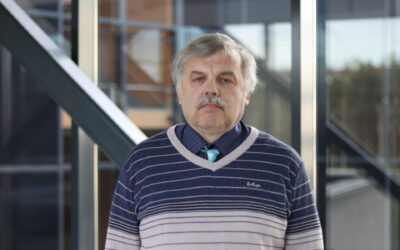
Peter Dajevskis has been president and co-founder of the firm Interpretive Solutions, Inc. (IS), consultants to cultural institutions for over 30 years. In collaboration with his wife and business partner, Ann Clausen, IS has provided interpretive planning and exhibit development services to museums and various historic sites across the United States, including the US National Park Service and 24 visitor centers administered by the Pennsylvania Historical and Museum Commission. In Philadelphia, IS developed interpretive plans for the Water Works Interpretive Center and the Eastern State Penitentiary Historic Site. Prior to establishing IS, Peter served as Hill International’s project management liaison to design architect Gunnar Birkerts for the new National Library of Latvia building. Before that, under contract with Hill, he was construction administrator for the Smithsonian’s National Museum of the American Indian at the George Gustav Heye Center in New York City. Prior to that assignment, he served as associate capital construction manager for the New York Public Library. In recent years, Peter has managed exhibit development and facilities upgrades for the American Latvian Association’s Latvian Museum. In 2026, with support from an AABS Baumanis Grant for Creative Projects, Peter collaborated with film director Māra Pelēcis to produce the first chapter of a three part documentary series that tells the story of pre-WWII Latvian immigration to Philadelphia.
Telling a Little-Told Story
Baumanis Grant Report from Peter Dajevskis
Introduction
The Baumanis Grant for Creative Projects in Baltic Studies provided Māra Pelēcis and me with an opportunity to delve into the Latvian immigration experience in Philadelphia prior to WWII. Why Philadelphia? The City of Brotherly Love and Boston were some of the first places in the United States where substantial numbers of Latvians immigrated and settled in the late 1880’s, the 1890’s, and the first decades of the 20th century. The availability of significant archival records, in Philadelphia and in Rīga, including access to powerful first person accounts about the early Latvian immigrant experience to Philadelphia, offered us a solid foundation for the creation of a short documentary about a period of history that offered limited prior familiarity.
Along with the project’s film director, Māra Pelēcis, I sought to tell this largely unknown story that would reach multiple audiences – both in the US and in Latvia but also with relevance for the Baltic region in general. We felt that this project would enhance understanding of the rich immigration history of Latvian-Americans before WWII on both sides of the Atlantic.
A Roadmap for Delivering the Story
The Philadelphia Society of Free Letts houses archives that contain rich documentation about Latvian immigration history going back to the organization’s founding in 1892. Fortunately for the demonstration project, the Society’s minutes and historical records thoroughly documented the Latvian immigration experience to Philadelphia in the late 19th and early 20th century. This detailed history was summarized by Roberts Līdums in his book Latvieši – Brīvības meklētāji [The Latvians -Freedom Seekers]. Published in 1973, the book provided the project team with a meticulously crafted historical “roadmap” of key events that reflects the contributions and challenges of its members as they adapted to new beginnings in Philadelphia.
Establishing a Through line for the Video Narrative
Līdums book also helped me formulate a basic throughline for delivering this complex story. Our mission was to present this story to general audiences in accordance with Līdums’“roadmap” outlined over 50 years ago. It helped me immensely to shape the basic scope of our research and development effort. As the project progressed, other archival resources revealed important stories and essential visuals that help our audiences understand the historical forces that were in play during the late 19th century, both in the Baltic region and the city of Philadelphia. This included the experiences of Latvians who lived under Imperial Russian rule and the czar’s Russification policies of that time. The ongoing impact of German nobles’ control over business and the regional Latvian economy continued to constrain Latvian upward mobility during that era.
From Courland to the “New Land” (Jaunā zeme)
Offering audiences a glimpse of the highly urban fabric of Philadelphia during the late 19th and early 20th century was a high priority. We felt that it was important to provide audiences with a sense of the environment that the new settlers encountered as they stepped off the pier on the Delaware River waterfront. By the same token, we wanted to portray the dramatic contrast between Philadelphia and the rural environment of Courland from which the new immigrants had come. To obtain a more intimate personal feel for the environment in Courland I turned to the personal accounts of Jānis Sirms, written by hand in his detailed memoir. Dr. Maruta Lietiņš- Ray, Professor emerita at the University of Virginia, converted his old orthography to modern orthography allowing us to fully understand his accounts. To provide audiences a snapshot of what conditions were like when Sirms left his home in 1888, we retained the services of the Latvia-based filmmaker Emīls Spunģis to film Sabile and Stende in the frigid January winter weather – similar to the time of year when Sirms left Courland in 1888. In addition, I sourced digital photos from the “Zudusī Latvija” (Lost Latvia) collection of the National Library of Latvia.
Use of Personal Accounts
In his memoir, Jānis Sirms offered many insights about what it took to emigrate to America in the late 19th century and what he confronted upon arrival. Sirms wrote his story in a wire bound notebook that I located in RĪga at the National Archives of Latvia, where I was able to photograph the full manuscript in its original German orthography. The author’s original handwritten manuscript had been transmitted to Latvia’s National Archives by Philadelphia’s Latvian Society for safekeeping back in the 1990’s. A number of Sirms’ exceptional first personal accounts relate the 25-year-old’s emotions upon departure from the village of Stende and his journey to Philadelphia that led him through Germany and then on to Liverpool, England, from where he eventually crossed the Atlantic to Philadelphia. The challenges that he faced as he sought to begin a new life offer vivid and dramatic insights, providing both an intellectual and emotional account of what immigration to a new land feels like.
What were the living conditions and job opportunities that Latvian immigrants of that time faced upon arrival in Philadelphia? The Panic of 1893, a major economic upheaval in American history, became a major element of our storyline. Ironically, the Panic happened just as the Philadelphia Society of Free Letts formed. The Panic created massive unemployment as the stock market crashed, leading to the largest economic depression in American history up to that point. Understanding these conditions help to explain the realities that immigrants faced during these times.
A Launching Pad for a Three-Part Documentary
As we gained an understanding of the depth, complexity, and richness of the story of the early Latvians, it became clear that the project had unexpectedly significant stories to tell. In the 11 minutes of production that the budget allowed, we realized that our demo would not be able to deliver the storyline beyond 1910, when the Latvian Society purchased the building that is still in use today. Financial support received from the Baumanis Creative Grant, enabled us to address the historical context of the early Latvian immigration and the first steps to establish a footing in the “New Land.” But two other key periods still need to be addressed leading up to World War II in 1940.
Part 2. Future Documentary: Latvian Religious Oppression and Recovery
Research at the archive belonging to the late Andris Straumanis, the preeminent scholar of Latvian-American history, revealed that substantial visual resources are available to support the storyline for two other chapters, creating a final 3-part documentary. I made two trips to River Falls, Wisconsin, where the Andris Straumanis archive is located, to review the remarkable collection in light of the goals of this project. Andris Straumanis’ daughter, Kaija Straumanis, generously made her father’s archives available. Significantly, the Straumanis collection documents the religious experience and cultural production of Latvian Baptist immigrants to North America before World War II. Straumanis based his studies on the periodicals and other publications generated by these immigrants.
I photographed and scanned important material from the pre WWII era to provide a foundation for telling the story of religious oppression by the Imperial Russian authorities and subsequently, how Baptist and Lutheran communities built a new religious life in America. The documentary’s second chapter, when funded, will interpret the story of Latvian immigrants who successfully built new homes for worship in America without fear of oppression, with clergy that could speak to them in their native tongue. In this regard, Pennsylvania’s history plays a particularly symbolic role, because William Penn founded the original colony of Pennsylvania on the basic tenet of religious freedom for all.
Part 3. Future Documentary: The Post-1905 Russian Revolution Wave of Immigration Creates Divisions in Philadelphia’s Latvian-American Life
In his writings about “Veclatvieši, or “Old Latvians,” Andris Straumanis divided the pre-WWWII Latvian immigrants who settled in the United States as follows: “Politically, the early immigrants were divided into two groups: one devoted to the creation of an independent Latvia; the other, influenced by socialism, concerned with freeing Latvian workers from the oppression of imperial Russia.”
This era was summarized by Roberts Līdums in his book. Jānis Sirms also commented on this period in his memoir. As Andris Straumanis pointed out: “A second wave of immigration of Old Latvians began around 1906, following the failed 1905 Revolution in the Latvian province of the Russian Empire. Many Latvian political leaders, as well as rank-and-file revolutionaries, faced certain death if caught by Russian soldiers, so they chose to emigrate.”
This was a period of conflict but also one of people coming together to create an active and rich cultural, religious and social life that is highlighted by Latvian publications, lectures, theatrical and musical programs at the Latvian Society and at other venues in Philadelphia, among other initiatives. The divisions that emerged created conflict as the revolutionary ideals of the new immigrants conflicted with those of the first wave. Part 3 of the documentary will explore this story up to 1940 with the beginning of WWII, when everything changed.
When completed the entire three-part documentary will address a universal theme of people throughout history who have met the challenges of economic, political, and cultural suppression by seeking new beginnings. Part 1, prepared as the AABS supported demonstration project, can be viewed through the Vimeo link below. Enter the following password to gain access: FreeLetts1892
What is the Baumanis Grant?
The Baumanis Grant is an award made to honor Velta Marija Baumanis of Mount Brydges, Ontario, who left a generous bequest to AABS at the end of her career as an architect. An award of up to $7,000 is available for any creative project (e.g., book, film, exhibit, etc.) that promotes Baltic studies. Preference is given to topics with a pan-Baltic or comparative aspect. Applicants must be members of the AABS at the time of application.
Other Grants and Fellowships News

Justina Smalkytė Awarded JBS Publication Development Grant
The Association for the Advancement of Baltic Studies is pleased to announce that Justina Smalkytė has been awarded the 2026-2027 Journal of Baltic Studies Publication Development Grant to support her research on Jewish defendants tried in Soviet-occupied Lithuania....
Holger Mölder Awarded 2026-2027 Academic Events and Projects Grant
The Association for the Advancement of Baltic Studies is pleased to announce that Holger Mölder has been awarded a 2026-2027 Academic Events and Projects Grant to support the workshop “The end of democracy? Is the populist wave unstoppable?” scheduled for June 30,...

Joseph Ellis Awarded 2026-2027 Academic Events and Projects Grant
The Association for the Advancement of Baltic Studies is pleased to announce that Joseph Ellis has been awarded a 2026-2027 Academic Events and Projects Grant to support the Baltic Studies Reading Room at Wingate University in North Carolina. The AABS Grant for...